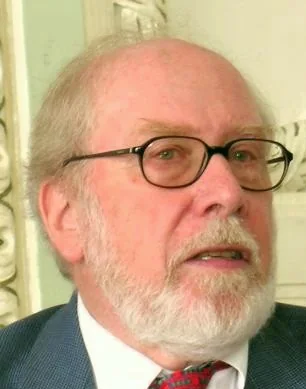
Niklaus Wirth did not seek to design one language capable of everything. From Pascal to Oberon, he asked the opposite question: what is the smallest set of concepts that lets people program clearly, verify essential structures, and build a complete system?
The search produced languages, compilers, operating systems, and experimental computers. Wirth wanted to test his ideas as a whole. Syntax alone cannot establish a language’s value; it appears in the programs the language organizes, the quality of its tools, and how easily readers understand the result.
His legacy links education, structured programming, modularity, and hardware design. Simplicity is an engineering method here, not a simplification reserved for beginners.
Why program structure became a problem
Niklaus Emil Wirth was born in Winterthur, Switzerland, in 1934. He studied electronics at ETH Zurich, earned a master’s degree at Université Laval in Canada, and completed a doctorate at the University of California, Berkeley, in 1963.
He later taught at Stanford amid debates about ALGOL. That language had introduced block structure and a clearer alternative to unrestricted jumps that made many programs difficult to follow.
ALGOL 68, intended as a successor, became highly ambitious. Wirth preferred a more restrained evolution and contributed to ALGOL W, which added data types and references while preserving a manageable structure.
The experience established a lifelong principle: every feature should reinforce a coherent model. Adding possibilities without controlling their interactions merely transfers difficulty from the designer to every language user.
Pascal connected algorithms and data structures
Wirth returned to Switzerland and joined ETH Zurich in 1968. He developed Pascal, first defined in 1970 and named after mathematician Blaise Pascal.
Pascal taught programming as a structured discipline. Blocks, procedures, and functions made computation’s organization visible. Its type system distinguished categories of values and supported arrays, records, sets, and pointers.
This richness fit inside a language small enough for students to grasp and for universities to implement. Wirth used an intermediate abstract machine, the P-machine, to ease adaptation of the compiler to different computers.
The language also embodied the connection expressed in his book title, Algorithms + Data Structures = Programs. An algorithm does not exist independently from its data. Choosing a list, array, or tree changes the possible operations, their cost, and the clarity of the program.
The history of Pascal follows its spread through education and microcomputers. Wirth’s particular contribution was pedagogical: teaching people to construct programs by making their structures explicit.
Pascal’s strengths also revealed its limits
Pascal quickly escaped the classroom. Many compilers and dialects appeared, exposing needs the original language did not always cover: separate compilation, libraries, systems access, and organization of software built by teams.
Implementations added their own extensions. UCSD Pascal popularized P-code; Turbo Pascal, later developed at Borland under Anders Hejlsberg, combined a fast compiler with an integrated environment. They advanced the Pascal ecosystem but were not Wirth’s creations.
The distinction matters. A language evolves through its designer, implementations, and communities. Wirth observed those uses but chose to address modularity in new languages instead of indefinitely extending Pascal.
Modula made component boundaries verifiable
Wirth developed Modula in the mid-1970s and Modula-2 from 1977. The name states the central idea: a large program should be divided into modules with explicit interfaces.
A module publishes selected types and operations while hiding its implementation. The compiler checks exchanges across the boundary. A team may alter a component internally without exposing its details, provided the interface remains stable.
Modula-2 also added mechanisms for systems work and concurrency. Wirth was no longer addressing isolated teaching exercises; he wanted complete software whose parts could be understood and tested separately.
The language accompanied Lilith, a personal computer developed at ETH. Designing the machine, compiler, system, and applications together revealed compromises hidden when a language is studied alone. Wirth wanted to verify that a small collection of principles could cross the entire computing stack.
Oberon pushed reduction further
During a stay at Xerox PARC, Wirth encountered personal workstations, graphical interfaces, and integrated environments. With Jürg Gutknecht, he later launched Oberon at ETH as both language and operating system.
Oberon derived from Modula-2 but removed several mechanisms deliberately. They sought a core small enough to explain, compile, and use for the whole system without abandoning modules or extensible types.
The project tested simplicity through implementation. A minimal language that requires enormous infrastructure solves little. Oberon therefore joined compiler, display management, text, files, and tools in one coherent environment.
Oberon never achieved Pascal’s commercial reach. Its influence comes instead from being a complete systems-design study, an educational model, and evidence that an interactive environment can be built with relatively little code.
What simplicity really meant to Wirth
The maxim associated with Wirth—software gets slower faster than hardware gets faster—summarizes a concern: more resources can encourage larger systems without proportional benefits for users.
His answer was not to reject abstraction. Pascal, Modula, and Oberon introduced powerful abstractions: user-defined types, modules, interfaces, and structured data. Wirth sought that power through few rules with predictable consequences.
The position involves trade-offs. A smaller language may require more specialized code or offer fewer libraries. Compatibility also limits removing old mechanisms. Bjarne Stroustrup’s C++ followed a partly opposite strategy, evolving a widely used language while preserving strong compatibility.
Simplicity, compatibility, performance, and expressiveness cannot always be maximized together. Every language decides where its costs belong.
A legacy in education and engineering
Wirth received the 1984 Turing Award for his languages and their influence on teaching and practice. He retired from ETH in 1999 but continued experiments around Oberon and hardware design. He died in 2024.
Pascal educated generations of programmers. Modula-2 made interface and implementation separation familiar. Oberon showed how a language, system, and tools could be designed as a whole.
The influence appears whenever a designer rejects a feature that would weaken the model, a teacher connects an algorithm to its data structure, or a team protects a component behind a verifiable interface. Wirth left a discipline rather than a universal formula: build, measure, remove what is unnecessary, and verify that the whole remains understandable.
Timeline
- 1934: Niklaus Wirth is born in Winterthur.
- 1959: He graduates in electronic engineering from ETH Zurich.
- 1960: He earns a master’s degree from Université Laval.
- 1963: He completes a Berkeley doctorate and begins teaching at Stanford.
- 1966: ALGOL W is developed.
- 1968: He becomes a professor at ETH Zurich.
- 1970: The first Pascal definition is published.
- 1975: The first Modula version appears.
- 1977–1978: Modula-2 and the Lilith project begin.
- 1984: He receives the Turing Award.
- 1986–1988: He designs Oberon with Jürg Gutknecht.
- 1999: He retires from ETH Zurich.
- 2013: A modernized Project Oberon is published.
- 2024: He dies at age 89.
- Today: His languages remain references for structure, modularity, and coherent systems design.
Frequently asked questions
Did Niklaus Wirth create Pascal alone?
He was Pascal’s principal designer and defined its goals. Its compilers and diffusion also reflect ETH collaborators and many independent implementation teams.
Why was Pascal designed for teaching?
Wirth wanted rules small enough to understand and features rich enough for procedures, types, and data structures. The goal was to teach program organization, not syntax memorization.
Did Wirth create Turbo Pascal?
No. Borland developed Turbo Pascal under Anders Hejlsberg from an earlier compiler. It extended the ecosystem but was not Wirth’s work.
How do Pascal and Modula-2 differ?
Pascal emphasizes structured-programming education. Modula-2 addresses larger systems through explicit module interfaces and separate compilation.
Is Oberon only a language?
No. Oberon names both a language and an operating system designed with Jürg Gutknecht to test whether a small concept set could support a complete environment.
Why are Wirth’s ideas still current?
Software still accumulates complexity. Explicit types, modules, narrow interfaces, and removal of unnecessary mechanisms remain essential ways to keep systems understandable.