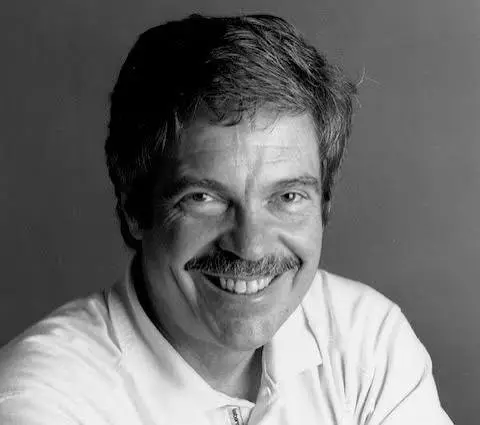
Alan Kay: Smalltalk and the computer as a personal medium
Learn how Alan Kay connected object-oriented programming, Smalltalk, the Dynabook, and graphical interfaces to make the computer a medium anyone could shape.
Pubblicato 24 agosto 2026Lettura : 19 minDi Bethemesh Team
Alan Kay did more than contribute to a programming language. He championed a broader idea: the personal computer should become a dynamic medium, as approachable as a book yet able to simulate systems, respond to its reader’s actions, and be reshaped by that reader.
This vision connects the Dynabook, Xerox PARC’s graphical environment, and Smalltalk. The language was not designed as an end in itself. It was meant to let children and researchers build their own models, see the result of a change immediately, and understand the computer by using it.
The story, however, is not about a lone inventor. Kay formulated and led an essential part of the project; Dan Ingalls, Adele Goldberg, Ted Kaehler, Diana Merry, and other members of the Learning Research Group turned that vision into successive versions of Smalltalk, graphical tools, and educational experiments.
Before Smalltalk: making the computer personal
In the 1960s, computing was still largely organized around shared mainframes. Programs were prepared, submitted, and then executed away from the user. Time-sharing was beginning to make interaction more direct, but the idea that one person might have a computer of their own remained exceptional.
Kay studied mathematics and biology before joining the University of Utah, an important center for ARPA-funded computer graphics research. There he encountered work that would shape his thinking: Ivan Sutherland’s Sketchpad showed that graphical objects could be manipulated directly; Simula represented a system through autonomous entities; and Seymour Papert’s work with Logo put programming at the service of learning.
These influences converged on one question: what would computing become if the machine belonged to its user and that user could modify the models with which they thought?
The Dynabook: a computer for learning
In the late 1960s, Kay imagined a notebook-sized portable device with a flat screen, keyboard, and wireless network. He called it the Dynabook, or dynamic book.
The project was not merely a hardware prediction of the tablet. A traditional book presents content fixed by its author. The Dynabook was meant to let its reader create, simulate, draw, write music, and program. A child would not simply consume a lesson: they would build a model, change a rule, and observe what happened.
The necessary hardware was then far beyond what could be manufactured affordably. The Dynabook therefore served as a research direction. At Xerox PARC, the Alto workstation became an “interim Dynabook” on which the team could experiment with bitmap displays, the mouse, windows, and interactive environments.
Smalltalk: treating everything as communicating objects
Smalltalk emerged in 1972 within the Learning Research Group led by Kay. Its central idea was less “everything is a class” than all computation can be understood as messages exchanged between objects. Each object keeps its own state and decides how to respond to the messages it receives.
This organization was intended to manage complexity. An object does not need to know how another object is implemented internally; it asks that object for a service. A program becomes a society of relatively autonomous entities instead of a long sequence of instructions in which every part shares the same details.
Smalltalk was also a complete environment. Code, tools, windows, and the objects being manipulated all belonged to the same modifiable world. A method could be changed while the system was running and its effect observed immediately. This continuity among writing, execution, and inspection gave development a live quality that many later environments would reproduce only in part.
A collective creation at Xerox PARC
Attributing Smalltalk to Kay alone would obscure the group’s work. Kay supplied the vision of objects, personal media, and learning. Dan Ingalls became a central technical force: he implemented several versions of the language, evolved its virtual machine, and worked with the team on its graphical tools. Adele Goldberg organized the documentation, teaching, and dissemination of Smalltalk-80. Ted Kaehler, Diana Merry, and others contributed to the language, interfaces, and experiments with children.
The versions did not form one immutable product. Smalltalk-72 explored a highly dynamic language; Smalltalk-76 consolidated the environment; Smalltalk-80 stabilized a model that could be distributed outside Xerox. This collective evolution matters as much as the original idea: a vision becomes influential only when a team makes it usable, explainable, and transferable.
Objects, graphical interfaces, and learning were one project
Smalltalk is sometimes told as the separate story of an object-oriented language, while the Alto is treated as the story of a graphical interface. For Kay, these dimensions belonged to the same project. A direct interface made objects visible; Smalltalk made their behavior modifiable; and the Dynabook gave that flexibility an educational purpose.
Overlapping windows, menus, high-quality text, on-screen painting, and animation gave users objects they could recognize and manipulate. Yet the ambition went beyond ease of use. Kay wanted users to be able to look behind the interface, understand how it worked, and adapt it.
That distinction remains important today. Modern interfaces are more approachable and secure, but they often confine users to behavior decided in advance. Smalltalk advocated an environment in which using and programming the machine formed a continuum.
How Smalltalk spread its ideas
Smalltalk never became the industry’s dominant language, but its ideas traveled along several paths. Objective-C adopted its messaging model and combined it with C. Java and C# brought classes, automatic memory management, and virtual machines into vast ecosystems. Ruby pursued a more consistent object experience. Browsers and modern development environments rediscovered interactive inspection and rapid modification in other forms.
Its graphical influence also spread through people who visited Xerox PARC and engineers who joined other companies. The interfaces of the Lisa and Macintosh, followed by those of mass-market systems, turned some PARC experiments into everyday conventions.
This lineage should not be oversimplified. Xerox PARC did not invent every component of the personal computer on its own, and later products did not copy a single model. The laboratory’s importance lies chiefly in integration: networking, bitmap display, mouse, interface, language, and printing worked together as a new computing environment.
After Xerox: continuing the dynamic medium
Kay later worked at Atari, Apple, Disney, and Hewlett-Packard. He continued to promote learning through the construction of models and contributed to projects such as Squeak, an open Smalltalk-derived implementation, and Etoys, an environment for building interactive simulations.
Through the Viewpoints Research Institute and his involvement with One Laptop per Child, he returned to the original problem: how can children be given a system simple enough to begin with, yet deep enough to remain useful as they progress?
This requirement distinguishes his approach from learning based on deliberately artificial features. An educational environment should lower the barrier to entry without teaching principles that students will later have to unlearn.
Why Alan Kay still matters
Kay’s contribution was not that he predicted the portable computer exactly, nor that he single-handedly created objects or the graphical interface. It was that he connected several ideas into a coherent vision: a personal computer should be a medium, a language should make that medium transformable, and learning should happen through building models.
Smalltalk also shows that a language can be inseparable from its environment. Its compact syntax alone does not explain its influence; the live system image, object inspection, and immediate loop between a change and its result are equally important.
Personal computers, tablets, and graphical interfaces have realized the visible part of the Dynabook. Its most ambitious part remains unfinished: making every user an author capable of understanding and reshaping their digital environment.
Timeline
1940: Alan Kay is born in Springfield, Massachusetts.
1966: He begins graduate studies in computer science at the University of Utah.
1968–1969: The Dynabook concept takes shape progressively.
1970: He joins the newly established Xerox Palo Alto Research Center.
1972: The Learning Research Group develops the first versions of Smalltalk.
1976: Smalltalk-76 consolidates the language and its environment.
1980: Smalltalk-80 prepares the system for wider distribution beyond Xerox.
1984: Kay becomes an Apple Fellow.
1996: Squeak, an open descendant of Smalltalk, is released.
2003: He receives the Turing Award for his contributions to object-oriented programming and personal computing.
Frequently asked questions
Did Alan Kay invent object-oriented programming?
He popularized the term and articulated an influential vision based on objects exchanging messages. Simula, however, had already introduced classes, objects, and inheritance. The history is one of evolution, not a single isolated invention.
Did Alan Kay create Smalltalk alone?
No. He led the Learning Research Group and carried the project’s vision, but Dan Ingalls, Adele Goldberg, Ted Kaehler, Diana Merry, and others designed, implemented, documented, and evolved the system.
Was the Dynabook a tablet?
Its form anticipated a portable device with a flat screen, but its purpose was broader. The Dynabook was intended as a programmable medium for learning, creating, and simulating, not merely as a mobile terminal.
Why did Smalltalk not dominate the industry?
Its environment initially required substantial resources, and its ecosystem remained smaller than those of C, Java, or mass-market platforms. Its ideas nevertheless spread into many languages and tools.
What is Alan Kay’s most lasting influence?
He showed that language, interface, and personal computer could form a coherent environment in which users manipulate objects, build models, and modify the system they use.
Why Alan Kay occupies a special place in computing history
Alan Kay belongs to a relatively rare group of researchers whose influence comes less from one dominant product than from a coherent vision of what computing could become. Smalltalk, the Dynabook, graphical interfaces, and object-oriented programming were not isolated interests. They were parts of one larger idea: the computer should become a personal, dynamic, programmable medium.
That perspective was radical. In the 1960s and early 1970s, computing was still strongly associated with institutions, specialists, and centralized machines. Kay imagined something different: a computer an individual could use to learn, create, simulate, communicate, and construct new tools.
The user would not merely consume programs made by somebody else. The user could become an author of the computational environment.
Utah, graphics, and a new model of computing
After studying mathematics and molecular biology, Kay pursued doctoral work at the University of Utah, one of the major centers of computer-graphics research.
There he encountered ideas that would shape his career: interactive graphics, simulation, direct manipulation, and early object systems. The Norwegian language Simula demonstrated that programs could be organized around entities representing things with their own state and behavior.
Kay pushed the idea further.
For him, objects should resemble small autonomous computers communicating through messages. That conception became one of the intellectual foundations of the history of object-oriented programming.
Sketchpad and Simula: ideas begin to converge
Two influences are especially important in accounts of Kay’s intellectual development.
Ivan Sutherland’s Sketchpad demonstrated that users could interact directly with graphical objects on a display rather than communicate with computers only through textual commands.
Simula introduced classes, objects, and mechanisms for representing complex simulated systems.
Kay saw the possibility of combining these directions into a much more general environment: visible and invisible objects that could interact, communicate, and form a complete computing system.
Smalltalk would therefore become more than a programming language containing objects. It was conceived as a computational world made of objects.
The Dynabook: imagining the tablet before the hardware existed
Around the end of the 1960s and beginning of the 1970s, Kay developed the concept of the Dynabook.
Its physical description looks remarkably familiar today: a lightweight personal computer with a flat display, portable enough to carry, and suitable for reading, writing, drawing, programming, and simulation.
But describing it merely as a tablet predicted decades early misses the main point.
Kay imagined a dynamic medium for thought.
A printed book can be read. Paper can be written or drawn on. A Dynabook could go further: a learner could change a simulation, construct a mathematical model, program an animation, or invent a new representation.
Children as full users of computing
Children were central to Kay’s vision.
He did not think they should receive a deliberately impoverished form of computing. Instead, computers could help them explore abstract ideas through concrete, manipulable representations.
This concern places his work near that of Seymour Papert and Logo, although their approaches were not identical.
A child could move objects, change rules, observe consequences, and build models. Learning could become active rather than merely receptive.
That educational goal helps explain why Smalltalk had to be both powerful and conceptually coherent enough to explore.
Xerox PARC: an extraordinary research environment
In 1970 Kay joined the newly created Xerox Palo Alto Research Center, better known as Xerox PARC.
The laboratory gathered an exceptional concentration of researchers working on networking, laser printing, user interfaces, programming languages, and personal computers.
Kay led the Learning Research Group.
The environment made it possible to work on hardware, language design, graphical interfaces, and learning at the same time. Smalltalk emerged from this setting, but it would be inaccurate to describe it as Kay’s work alone.
Smalltalk was a collective achievement
Kay articulated much of the conceptual vision, while Dan Ingalls, Adele Goldberg, Ted Kaehler, Diana Merry, and others made essential contributions to the actual systems.
Ingalls played a central role in language implementations and virtual-machine work. Goldberg contributed to development, documentation, and the communication of Smalltalk’s ideas. Kaehler worked on systems and educational experiments.
This collective dimension matters.
Computing history often compresses complicated projects into biographies of one famous person. Kay’s contribution was enormous, but it became real through an unusually strong team.
Smalltalk-72, Smalltalk-76, and Smalltalk-80
Smalltalk did not appear in a final form.
Early versions were experiments in how the group’s ideas should work. Smalltalk-72 explored a highly message-oriented object model. Smalltalk-76 consolidated important aspects of the language and environment. Smalltalk-80 became the version through which Smalltalk ideas spread much more widely beyond PARC.
The sequence shows that Smalltalk was a research program as much as a language.
The team explored how objects should behave, how programmers should inspect a running system, how code could be changed interactively, and how graphical interaction could be part of the same environment.
“Everything is an object” is useful but incomplete
Smalltalk is often summarized by saying that everything is an object.
That captures the system’s uniformity, but Kay repeatedly emphasized something he considered even more important: messaging.
An object should not need intimate knowledge of another object’s internal representation. It sends a message, and the receiving object determines how to respond.
This separation supports encapsulation and allows implementations to change without forcing the whole system to change.
Later object-oriented languages adopted related ideas in many different forms.
The graphical interface as a programmable environment
PARC research brought together windows, icons, menus, pointing devices, and direct manipulation.
In the Smalltalk world, however, the interface was not merely a decorative layer covering an inaccessible system.
It was deeply connected to the programming environment.
A programmer could inspect objects, browse classes, change methods, and immediately observe the consequences.
That continuity between using and programming the computer expressed Kay’s central idea: a personal computer should remain malleable.
The Alto makes the future visible
The Xerox Alto was crucial to this work.
Its bitmap display, mouse, and graphics capabilities gave PARC researchers a platform on which ideas about graphical interaction could be tested directly.
The Alto was not a mass-market personal computer in the modern sense, but it made part of Kay’s imagined future tangible.
Hardware and software developed together. Smalltalk exploited the graphical machine, while experiments with interfaces created new reasons to evolve Smalltalk.
Influence on modern graphical interfaces
Ideas developed at PARC strongly influenced later graphical systems.
Apple studied PARC’s work, and concepts developed in this research tradition later appeared, transformed and productized, in systems such as the Lisa and Macintosh.
The story should not be reduced to a simple transfer from Xerox to Apple. Modern graphical interfaces grew from a long chain of research by many individuals and organizations.
Kay and his colleagues nevertheless occupy a central place in that genealogy.
Smalltalk and later object-oriented languages
Smalltalk’s influence is far larger than its direct user base.
Later languages adopted objects, classes, inheritance, messaging concepts, garbage collection, interactive environments, or combinations of these ideas.
Java, created under the leadership of James Gosling, followed a different design path but helped make object-oriented programming mainstream for millions of developers.
Python, created by Guido van Rossum, also uses an object model while remaining multi-paradigm and syntactically very different.
Influence does not mean these languages are copies of Smalltalk. It means ideas explored radically at PARC became part of the normal vocabulary of software design.
Alan Kay and a common misunderstanding about OOP
Kay has often expressed disappointment with what the software industry sometimes retained from object-oriented programming.
Many developers primarily associate OOP with classes, inheritance, and large type hierarchies.
Kay placed greater emphasis on independent entities protected by encapsulation and communicating through messages.
The distinction is not merely terminological.
It contrasts objects understood mainly as code structures with a model closer to small computers collaborating through protocols.
That helps explain why Kay could regard some nominally object-oriented languages as distant from the idea he originally cared about.
“The best way to predict the future is to invent it”
A line widely associated with Alan Kay says that the best way to predict the future is to invent it.
Whatever the exact history of the quotation, it captures his approach well.
Kay did not merely forecast that computers would become personal, graphical, and portable. He helped build prototypes through which such a future could be experienced.
Prototype culture matters because computing ideas can be difficult to evaluate on paper.
Smalltalk, the Alto, and educational experiments turned abstract concepts into systems people could actually use.
After Xerox PARC
Kay’s career continued far beyond PARC.
He worked at organizations including Atari, Apple, and Disney, while remaining involved in research and education.
At Apple he became an Apple Fellow. The setting was especially appropriate: the company was building graphical personal computers for a broad public.
Kay, however, remained more interested in unrealized possibilities than in simply celebrating existing products.
Squeak: reviving the Smalltalk spirit
In the 1990s, Kay and several people from the Smalltalk tradition helped develop Squeak, an open Smalltalk implementation.
Squeak preserved the idea of a live, portable environment and provided a platform for multimedia and educational experimentation.
The project demonstrated that Smalltalk was not merely a historical episode from PARC. Its ideas could remain an active research laboratory decades later.
Etoys: learning by building
Etoys, developed around Squeak, extended these ideas toward learning.
Users could manipulate graphical objects and give them behavior.
The objective remained faithful to the Dynabook vision: a computer should not simply display educational content. Learners should be able to build models, test hypotheses, and create their own representations.
The distinction between consuming digital content and constructing with a computer is one of the strongest threads running through Kay’s career.
Croquet and collaborative environments
Kay also participated in work around Croquet, an environment exploring collaborative spaces and distributed interaction.
Again, the continuity is visible: the computer is treated as an active space in which people can construct and interact rather than as a fixed appliance.
Not every research prototype becomes a mass-market product.
Its historical value can instead lie in exploring possibilities before the market knows how to use them.
Viewpoints Research Institute and STEPS
Kay helped establish the Viewpoints Research Institute, focused on education and research into new computing systems.
The STEPS project explored an ambitious question: could much of a modern personal-computing environment be recreated with dramatically less code by using more powerful and composable ideas?
The question extends a long-standing concern in Kay’s work.
Improved hardware should not require us to accept unlimited software complexity. Computing should also progress in our ability to describe systems more simply and understand them more deeply.
His criticism of the computer industry
Kay has frequently criticized the actual state of computing.
He argues that many modern systems remain unnecessarily complicated and that the industry often exploits only a small fraction of the computer’s potential as a medium.
That attitude may seem surprising from a pioneer whose ideas became commonplace.
But seeing windows, objects, or tablets everywhere does not mean the full Dynabook vision was achieved.
A tablet used primarily to consume closed applications is very different from a personal medium whose owner can understand, program, and reshape it.
The computer as a new medium
One of Kay’s deepest ideas is to compare the computer with the printing press rather than merely with calculating machinery.
A genuinely new medium does more than imitate old ones.
Cinema is not simply filmed theater. A computer should not be merely electronic paper, interactive television, or an improved typewriter.
Its distinctive power is simulation.
It can represent text, animation, equations, simplified physical worlds, or even the behavior of another computer.
For Kay, learning how to use this property fully remains an unfinished project.
Why his influence is difficult to measure
Alan Kay is not associated today with a dominant language comparable to C, Java, or Python.
Smalltalk remains influential but comparatively niche.
The Dynabook never became a mass-market product carrying that name.
Yet Kay’s influence appears everywhere: objects, graphical interfaces, portable personal computers, interactive programming environments, educational software, and the idea of computing as a personal medium.
His impact therefore lives largely in concepts that became normal, not in the market share of one product.
Alan Kay compared with Guido van Rossum and James Gosling
Comparing language creators reveals different forms of influence.
Guido van Rossum created Python and guided a language that eventually became globally dominant in several fields.
James Gosling helped create Java in an industrial setting that grew into a vast platform.
Kay followed another path.
Smalltalk never achieved the same direct scale, yet its ideas penetrated deeply into languages, tools, and interfaces that followed.
A researcher’s influence cannot therefore be measured only by the number of direct users of their software.
A lesson about innovation
Kay’s career demonstrates that important innovation can arrive long before the market can adopt it.
The Dynabook was imagined when displays, batteries, processors, storage, and networking were far from what a modern tablet requires.
A researcher therefore has to distinguish between two questions: what can be built economically today and what ought to become possible tomorrow.
Kay’s willingness to work on the second question is one of his defining qualities.
What Alan Kay can still teach us
Several principles from his work remain useful.
A simple interface does not require an intellectually weak system. Children can work with powerful ideas when concepts are coherent. A programming language is also an environment and a culture. Objects matter most when they help decouple parts of a system. And a truly personal computer should let its owner create, understand, and modify more of what it does.
These ideas remain strikingly current.
Alan Kay’s legacy
Alan Kay helped change the central question of personal computing.
Instead of asking only, “How do we make this machine calculate?”, his work asks: what kind of medium becomes possible when individuals possess programmable machines?
Smalltalk answers through objects and a live environment. The Dynabook answers through mobility and learning. Graphical interfaces make computational objects directly manipulable. His later research keeps searching for systems that are more powerful yet more understandable.
That is why his place in computing history extends far beyond Smalltalk.
He is one of the people who helped imagine personal computing before the industry fully knew what a personal computer should be.
Frequently asked questions
Who is Alan Kay?
Alan Kay is an American computer scientist known for work on Smalltalk, object-oriented programming, the Dynabook, graphical interfaces, and educational computing.
Did Alan Kay invent object-oriented programming?
He is one of its foundational figures and helped popularize the term, but the history is collective. Simula introduced major class and object concepts before Smalltalk.
Did Alan Kay create Smalltalk alone?
No. Kay articulated much of the vision, but Smalltalk was developed collectively at Xerox PARC, notably by Dan Ingalls, Adele Goldberg, Ted Kaehler, and other researchers.
What is the Dynabook?
The Dynabook is a concept for a portable personal computer intended for creation, learning, simulation, and programming, imagined decades before modern tablets.
Why is Smalltalk important?
Smalltalk pushed the model of message-passing objects very far and combined language, programming environment, and graphical interface into a coherent live system.
Did Alan Kay invent the graphical user interface?
No. Graphical interfaces emerged from many earlier and contemporary research projects. Kay and the teams at Xerox PARC nevertheless played a major role in developing and experimenting with them.
What is Alan Kay’s connection with Apple?
Kay worked at Apple and became an Apple Fellow. The PARC research tradition in which he participated also influenced the history of graphical interfaces leading to systems such as the Macintosh.
Why does Alan Kay sometimes criticize modern computing?
Because widespread personal computers have not necessarily fulfilled his broader vision of a programmable medium that users can understand, create with, and control.
Is Smalltalk still used?
Yes, although it is now a minority language. Its conceptual influence remains substantial, and several Smalltalk environments and dialects continue to exist.
Why study Alan Kay today?
Because his work connects object-oriented programming, graphical interfaces, mobility, learning, and system design. It shows that a major computing innovation can be a new way of thinking about the machine, not merely a new product.
Discover how Guido van Rossum built Python from lessons learned with ABC, guided its evolution, and prepared a personal language to become a community project.