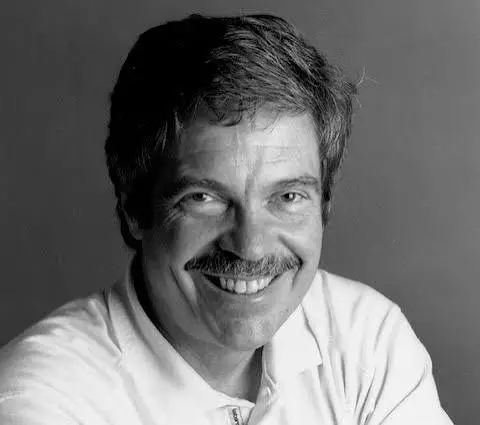
Alan Kay: Smalltalk and the computer as a personal medium
Learn how Alan Kay connected object-oriented programming, Smalltalk, the Dynabook, and graphical interfaces to make the computer a medium anyone could shape.
Published 24 August 2026Updated 15 September 2026Reading : 7 minBy Yann Bastien
Alan Kay did more than contribute to a programming language. He championed a broader idea: the personal computer should become a dynamic medium, as approachable as a book yet able to simulate systems, respond to its reader, and be reshaped by that reader.
That vision connects the Dynabook, the graphical research carried out at Xerox PARC, and Smalltalk. The language was never an end in itself. It was meant to let children and researchers build models, change their rules, and immediately see what happened.
Nor is this the story of a lone inventor. Kay gave the project much of its intellectual direction, while Dan Ingalls, Adele Goldberg, Ted Kaehler, Diana Merry, and other members of the Learning Research Group turned the vision into languages, tools, and educational experiments.
Before Smalltalk: imagining a truly personal computer
In the 1960s, computing still revolved largely around shared mainframes. Time-sharing brought people closer to the machine, but the idea of having a computer of one’s own remained unusual.
Born in 1940, Kay studied subjects including mathematics and biology before doing graduate work at the University of Utah, then a major center for computer graphics. Several influences came together there. Ivan Sutherland’s Sketchpad showed that graphical objects could be manipulated directly. Simula organized simulations around entities with state and behavior. Seymour Papert’s work with Logo placed programming at the heart of learning.
Kay drew a question from these ideas that went beyond designing a new machine: what might computing become if people could not only use their computers, but also change the models they used to think with?
The Dynabook: much more than an early tablet concept
In the late 1960s, Kay imagined a notebook-sized portable computer with a flat display, keyboard, and wireless networking. He called it the Dynabook, or dynamic book.
Its resemblance to a modern tablet is striking, but focusing on the hardware misses the point. A conventional book contains material fixed by its author. The Dynabook was supposed to let its reader write, draw, compose music, simulate, and program. A child would not simply consume a lesson; they could build a model, change a rule, and watch the consequences.
The required hardware was far too expensive and bulky at the time. The Dynabook therefore became a research direction rather than a product. At Xerox PARC, the Alto workstation served as an “interim Dynabook,” giving the team a practical platform for experimenting with bitmap displays, mice, windows, and interactive software.
Xerox PARC: language, interface, and learning as one project
Kay joined the newly created Xerox Palo Alto Research Center in 1970 and led the Learning Research Group. Smalltalk emerged in this setting from 1972 onward.
Smalltalk, graphical interfaces, and personal computing are sometimes told as separate stories. For Kay, they belonged together. The interface made objects visible and manipulable; the language let users change their behavior; the personal computer provided a space in which to experiment.
The ambition went beyond ease of use. Kay wanted a system whose workings a user could gradually understand, allowing that user to become an author rather than remain only a consumer.
Smalltalk: objects sending messages
Kay’s place in the history of object-oriented programming needs careful wording. He did not single-handedly invent objects: Simula had already introduced classes, objects, and inheritance. Kay did, however, popularize the term “object-oriented” and advance a distinctive interpretation of the paradigm.
At its heart was the idea of autonomous objects communicating through messages. Each object maintains its own state and decides how to respond to requests. The aim is to contain complexity: one part of a system can use another without depending on every detail of its implementation.
Smalltalk pursued this idea with unusual consistency. The language, development tools, windows, and objects being manipulated all belonged to the same live environment. A programmer could inspect an object, change a method while the system was running, and see the result immediately. That short loop between idea, change, and feedback anticipated much of modern interactive development.
Smalltalk was a collective achievement
Saying simply that Alan Kay “created Smalltalk” erases an essential part of the story. Kay articulated the vision and led the group, but the system was built collectively.
Dan Ingalls played a central technical role in implementations, the virtual machine, and graphical tools. Adele Goldberg made major contributions to documentation, education, and the dissemination of Smalltalk-80. Ted Kaehler, Diana Merry, and others worked on the language, interfaces, and experiments with children.
Smalltalk also evolved through generations. Smalltalk-72 explored highly dynamic ideas; Smalltalk-76 consolidated the language and environment; Smalltalk-80 stabilized a system that could spread beyond Xerox. Its lasting influence owes as much to that collective engineering as to the original vision.
The graphical interface as a malleable environment
PARC helped bring bitmap displays, mice, windows, menus, graphical text, networking, and printing together into a coherent environment. Visitors and former researchers later carried ideas elsewhere, while systems such as the Lisa and Macintosh turned some of them into mainstream conventions.
The familiar story that Xerox simply “invented the GUI” and others copied it is too neat. Many components had earlier roots, and later commercial systems made important choices of their own. PARC’s strength lay especially in integration: technologies working together to create a new way of using a computer.
For Kay, the interface was never entirely separate from programmability. The ideal remained an environment people could explore, understand, and reshape.
From Smalltalk to modern languages
Smalltalk never became the industry’s dominant language, but its ideas travelled widely. Objective-C directly combined its messaging model with C. Java and C# brought classes, automatic memory management, and virtual machines to enormous ecosystems. Ruby pursued a particularly consistent object experience.
Modern development environments also echo Smalltalk through interactive inspection, consoles, visual debugging, rapid reloading, and immediate feedback. The lines of influence are not simple, but Smalltalk remains one of computing history’s clearest demonstrations of what becomes possible when a language and its environment are designed together.
After Xerox: Squeak, Etoys, and learning by making
Kay later worked at Atari, Apple, Disney, and Hewlett-Packard while repeatedly returning to the same question: how can a computer become a tool for thinking and creating?
He took part in Squeak, an open Smalltalk-derived implementation, and later Etoys, an environment for building interactive simulations. Through the Viewpoints Research Institute and involvement with One Laptop per Child, he continued exploring learning through programming and modeling.
His standard was demanding: make the first step easier without building a conceptual toy that learners must later discard. A child should be able to begin simply while using a system deep enough to support increasingly sophisticated ideas.
Why the Dynabook remains unfinished
Laptops and tablets have realized a spectacular part of Kay’s hardware vision. We carry thin, connected screens able to display text, images, music, video, and simulations.
Yet the Dynabook’s most ambitious dimension remains only partly realized. Modern devices are often excellent for consuming content and using applications, but much less open to helping ordinary users understand and transform the system itself.
Reducing Kay to someone who “predicted the iPad” is therefore misleading. His project was less about the shape of a device than about the intellectual relationship between a person and a computer.
Alan Kay’s legacy
Kay matters because he connected ideas that might otherwise have remained separate: objects, graphical interfaces, personal computing, learning, and interactive programming.
His legacy also requires resisting myths. He did not single-handedly invent object-oriented programming, Smalltalk, the graphical interface, or the tablet. His contribution was that of a researcher and research leader who combined existing influences into a coherent vision and assembled a team capable of exploring its consequences.
That vision remains radical: a personal computer should do more than make software easy to use. It should help its owner understand, construct, and transform ideas.
Timeline
1940: Alan Kay is born in Springfield, Massachusetts.
1966: he begins graduate study in computer science at the University of Utah.
1968–1969: the Dynabook concept takes shape.
1970: Kay joins Xerox Palo Alto Research Center.
1972: the Learning Research Group develops the first Smalltalk versions.
1976: Smalltalk-76 consolidates the language and environment.
1980: Smalltalk-80 prepares the system for wider distribution outside Xerox.
1984: Kay becomes an Apple Fellow.
1996: Squeak, an open descendant of Smalltalk, is released.
2003: Kay receives the Turing Award for contributions to object-oriented programming and personal computing.
Frequently asked questions
Did Alan Kay invent object-oriented programming?
Not by himself. Simula had already introduced classes, objects, and inheritance. Kay popularized the term and developed an especially influential vision centered on autonomous objects communicating through messages.
Did Alan Kay create Smalltalk alone?
No. He led the Learning Research Group and carried much of the project’s vision, but Dan Ingalls, Adele Goldberg, Ted Kaehler, Diana Merry, and others designed, implemented, documented, and evolved the system.
Was the Dynabook a tablet?
Its form anticipated a portable flat-screen device, but its ambition was broader: a programmable medium for learning, creating, and simulating, not merely a mobile terminal.
Why didn’t Smalltalk dominate the industry?
Its environment initially demanded substantial computing resources, and its ecosystem remained smaller than those of platforms that later achieved mass adoption. Its ideas nevertheless spread through many languages, interfaces, and development tools.
What is Alan Kay’s most lasting influence?
The idea that language, interface, and personal computer can form one environment in which users do more than consume software: they manipulate objects, build models, and reshape the system they use.
Discover how Guido van Rossum built Python from lessons learned with ABC, guided its evolution, and helped a personal language become a community project.